
Hiring the right people has a direct impact on business performance. Every hiring decision influences productivity, team dynamics, customer experience, and long-term growth. Understanding the right staffing approach becomes even more important when it comes to permanent hiring, as these are the people who become accountable minds driving your company’s growth and shaping its future.
According to the Periodic Labour Force Survey (PLFS) Annual Report 2025, the share of workers in regular wage and salaried employment increased from 22.4 percent in 2024 to 23.6 percent in 2025. This reflects a growing preference for stable employment, making it even more important for businesses to attract and retain the right talent.
Despite this, many businesses continue to make unavoidable mistakes during the permanent recruitment process, resulting in poor hiring decisions, higher attrition, and increased recruitment costs.
Hiring Before Defining the Role
Many permanent recruitment mistakes happen before the hiring process even begins. Companies often begin sourcing candidates with incomplete job descriptions or unclear expectations, assuming these details can be discussed during interviews. This approach usually creates confusion for recruiters, hiring managers, and candidates alike.
A well-defined role should clearly outline responsibilities, required skills, reporting relationships, performance expectations, and opportunities for growth. When everyone involved in the hiring process has a clear understanding of the role, recruiters are more likely to identify candidates who are genuinely suited for the position. Defining these expectations early also helps reduce permanent recruitment process errors that can delay hiring or lead to poor hiring decisions.
When Speed Becomes the Enemy of Quality
Business needs often create pressure to fill vacancies as quickly as possible. While reducing time-to-hire is important, rushing recruitment can result in hiring candidates who are not the right fit for the role or the organization. Replacing a poor hire often costs far more than investing additional time in making the right decision. So, businesses must either work with a reliable recruitment partner with access to a ready pool of quality talent or be prepared to trade speed for quality.
Because with regular wage and salaried employment on the rise, as reflected in the PLFS Annual Report 2025, more professionals are seeking stable, long-term roles rather than short-term positions. This makes it even more important for businesses to get the hiring decision right the first time, since candidates seeking stability are less likely to accept a role that was clearly filled in haste. Balancing hiring speed with hiring quality remains one of the biggest permanent recruitment challenges businesses face today.
Hiring for Skills but Ignoring Cultural Fit
Technical expertise is important, but it is only one part of a successful hiring decision. Employees also need to communicate effectively, collaborate with teams, adapt to change, and align with the organization’s values. Candidates who excel technically but struggle in these areas often find it difficult to succeed over the long term.
Looking beyond technical qualifications is one of the most effective permanent recruitment best practices. Assessing behavioural competencies alongside functional skills helps businesses build teams that are productive, collaborative, and more likely to remain with the organization.
A Poor Candidate Experience Can Cost You Top Talent
Recruitment is often a candidate’s first interaction with an organization. Long response times, poor communication, repeated interview rounds, or unclear timelines can quickly discourage qualified professionals.
Today’s candidates expect a professional and transparent hiring experience. Companies that communicate clearly, provide timely updates, and respect candidates’ time to strengthen their employer brand and improve offer acceptance rates. Many common hiring mistakes in India, such as delayed feedback or inconsistent communication, can be avoided by creating a structured and candidate-focused recruitment process.
Reactive Hiring Creates Long-Term Challenges
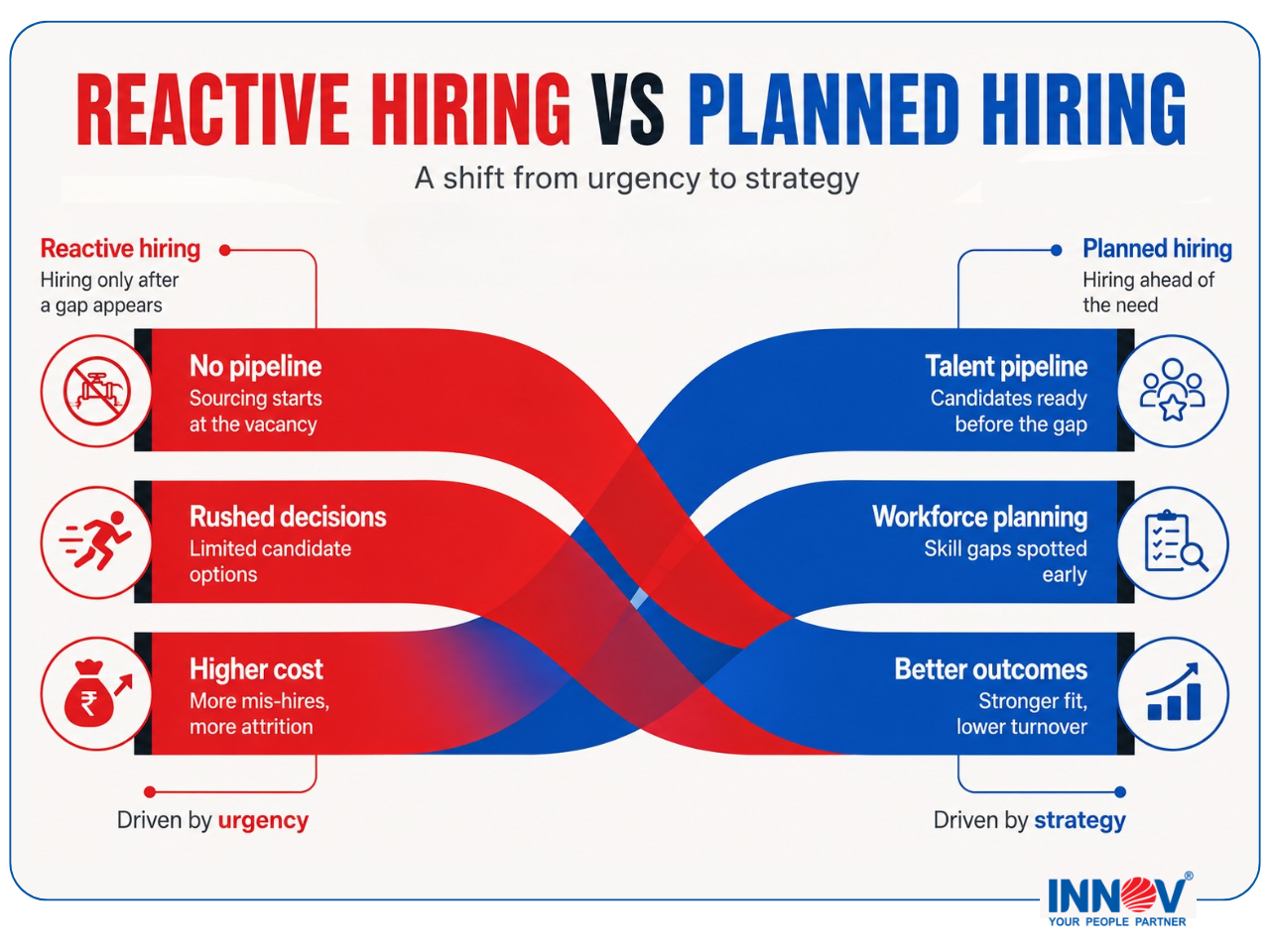
While the previous points focus on individual hiring decisions, this challenge sits at a higher level. Many organizations recruit only after a vacancy arises, with no pipeline in place at all. This reactive approach leaves little room for workforce planning and often results in rushed hiring decisions, limited candidate options, and increased recruitment costs.
Planning recruitment in advance allows businesses to build talent pipelines, prepare for future expansion, and identify skill gaps before they affect operations. This matters because the available talent pool is substantial. According to the PLFS Annual Report 2025, India’s labour force participation rate for individuals aged 15 years and above stood at 59.3 percent, indicating a large and active workforce. However, attracting the right talent from this pool still requires a structured hiring strategy, especially in competitive industries where skilled professionals have multiple employment opportunities.
Strengthening Your Permanent Recruitment Strategy
Avoiding permanent recruitment process errors does not require a complete overhaul of the hiring process. Small improvements at every stage can significantly improve hiring outcomes.
Clear job descriptions, structured interviews, consistent candidate communication, skills-based assessments, and workforce planning all contribute to stronger hiring decisions. Tracking recruitment metrics such as quality of hire, retention, and time-to-fill also help businesses identify opportunities to improve their hiring strategy over time. These permanent recruitment best practices help organizations build stronger teams while reducing hiring costs and employee turnover.
Building a Workforce That Lasts
Successful permanent recruitment is about more than filling vacancies. It is about hiring people who will contribute to the organization’s growth, strengthen its culture, and create long-term business value. By avoiding common pitfalls and following proven best practices at every stage, from role definition to workforce planning, businesses can improve employee retention and build a workforce that supports future growth.
If your business is looking to strengthen its permanent hiring strategy, Innovsource can help. Our recruitment specialists work closely with organizations across industries to identify, attract, and hire skilled professionals who are the right fit for both the role and the business. Explore Innovsource’s permanent recruitment solutions to build a workforce that is ready for long-term success.